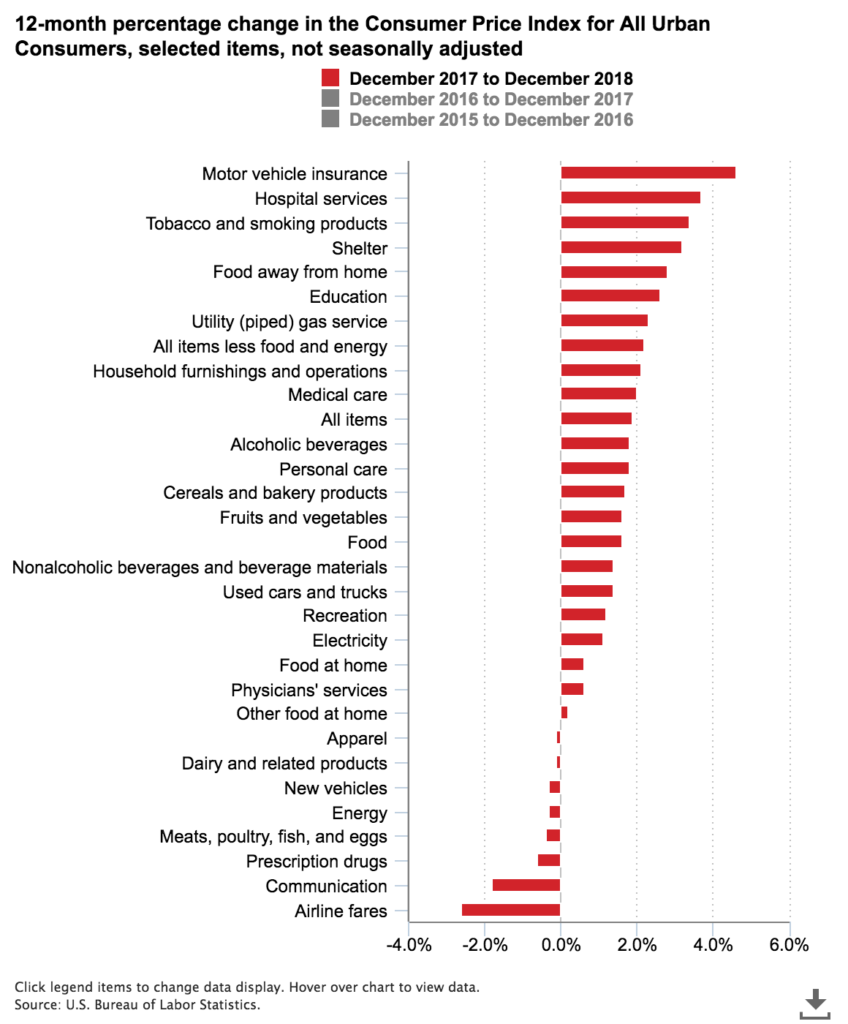
Consumer prices have risen for four of the six major grocery store food groups.
Food prices increased 1.6% from December 2017 to December 2018, the same as the previous year.
Prices for food at home rose 0.6% in 2018, after rising 0.9% in 2017.
From December 2017 to December 2018, consumer prices rose for four of the six major grocery store food groups. Prices declined over the year in the other two groups. Prices for fruits and vegetables rose 1.6% in 2018, after rising 1.5% in 2017.
Prices for cereals and bakery products increased 1.7 percent in 2018, while prices for nonalcoholic beverages and beverage materials increased 1.4%. Prices for other food at home increased 0.2% in 2018.
Prices for meats, poultry, fish, and eggs fell 0.4% in 2018, following a 2.8-% increase in 2017. Prices for dairy and related products fell 0.1% in 2018, the fourth straight yearly decline.
Energy prices fell 0.3% in 2018, after a 6.9-% increase in 2017. Gasoline prices decreased 2.1% in 2018, following a 10.7-% increase in 2017. Prices for natural gas increased for the third straight year in 2018, rising 2.3%, compared with 4.7% in 2017. Prices for electricity increased 1.1% in 2018, after rising 2.6% in 2017.
Medical care prices increased 2.0% in 2018, following a 1.8-% increase in 2017. Prescription drug prices fell 0.6% in 2018, while prices rose 3.7 for hospital services and 0.6% for physicians’ services.
This data is from the Consumer Price Index program and is not seasonally adjusted. For more information, see “Consumer Price Index — December 2018.” We also have more charts on consumer prices.