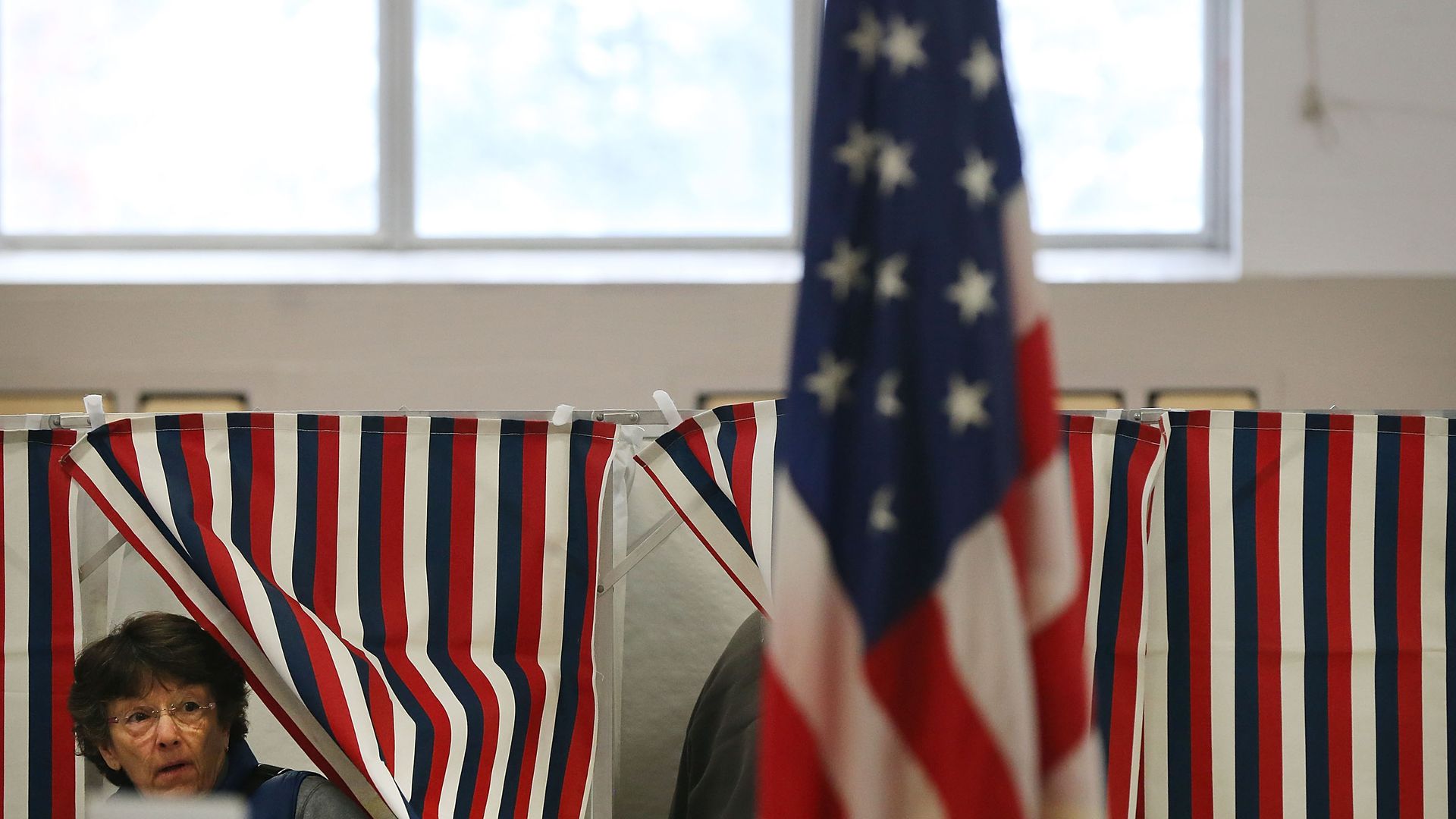
US companies have made a pledge to give employees time off to vote in this 2020’s presidential election.
Companies across the United States want voter participation to rise in the 2020 general elections, and they’re planning on achieving it with a nonpartisan movement called Time to Vote, which urges CEOs and business owners to make accommodations so their workers can go out and vote.
Reporting from Chip Cutter in The Wall Street Journal says at least 383 companies, with more than two million workers in 50 states, including JPMorgan Chase, Lyft, DICK’S Sporting Goods, PayPal, Patagonia, VF Corporation, Walmart, Hewlett Packard, and hundreds more have signed on to the initiative, originally formed ahead of the 2018 midterm elections, when 411 companies representing all 50 states and a variety of industries joined. Organizers aim to enlist 1,000 companies by November, as the 2020 presidential election is scheduled for Tuesday, November 3rd. Efforts such as paid time off on Election Day or making Election Day a day without meetings are just some of the ways the initiative suggests corporate leaders to play a part.
Historically, the shadow of low voter turnout has loomed large over the US, even when the average global voter turnout rate has dropped by more than 10% over the last 25 years, according to the 2017 World Bank Development Report. In a 2018 investigation by Pew Research Center, the United States ranked 31st out of 35 countries for voter turnout based on the voting age populace, among its peers that are a part of the Organization for Economic Cooperation and Development (OECD), most of whose members are highly developed, democratic states. The highest turnout rates among OECD nations were in Belgium (87.2%), Sweden (82.6%) and Denmark (80.3%). Since 1976, Pew Research Center data adds, voting-age turnout has remained within an 8.5 % point range – from just under 50% in 1996, when Bill Clinton was re-elected, to just over 58% in 2008, when Barack Obama won the White House, which also proved to be the most racially and ethnically diverse in U.S. history, driven by increases both in the number and in the turnout rates of minority eligible voters. However, according to a 24/7 Wall Street report from Evan Comen, Michael B. Sauter, Samuel Stebbins, Thomas C. Frohlich and Alexander Kent, voter participation also depends on the state where you vote, as fewer Americans vote when their states are less competitive in races between Democrats and Republicans.
These harsh numbers hitting American democracy can be summarized into one steep problem: A lack of trust. Americans’ trust in all of the most important democratic institutions has been falling for decades, especially for the government’s ability to deal with domestic and international problems, so it results in no surprise voter turnout has paralleled with an absence in the voter stall.