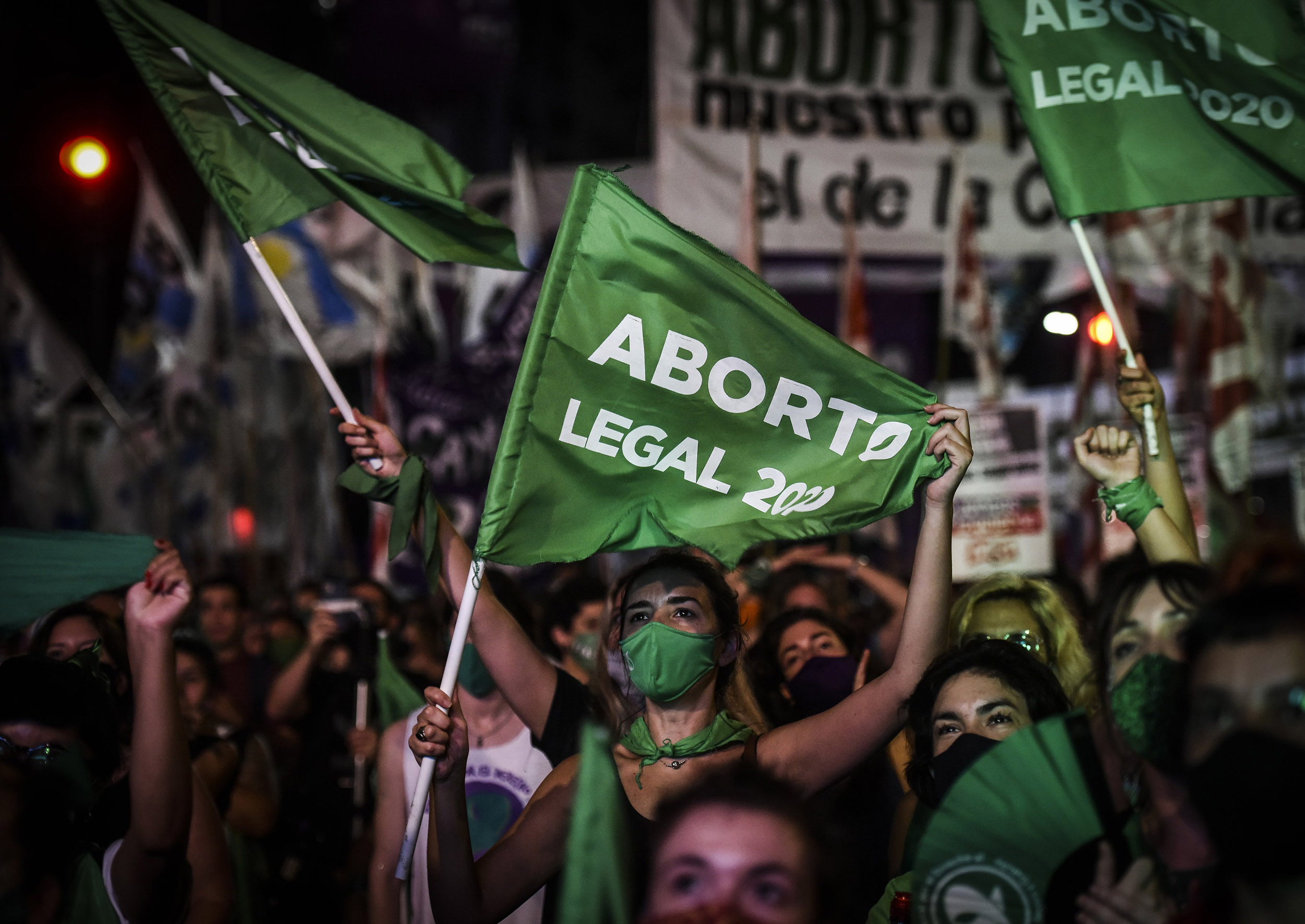
Argentina’s Senate voted a major shift in the predominantly Catholic and socially conservative country.
Argentina’s Senators voted (38 to 29 vote sand one abstention) in favour of a bill that legalizes abortions up to the 14th week of pregnancy, a ground-breaking move for a region that has some of the world’s most restrictive termination laws. The bill had been approved by the Chamber of Deputies earlier this month because the center-left party of President Alberto Fernández, who backs the bill, holds a majority coalition, but it was unclear how it would play out in the upper house.
Until now, abortions were only permitted in cases of rape or when the mother’s health was at risk.
Analysis by Katy Watson, BBC
While Argentina’s powerful Catholic Church, and its growing evangelical community, put up strong opposition against this bill, it was Argentina’s mighty “green wave” women’s movement that has been at the forefront of this change.
A grassroots feminist movement that has grown in influence in the past few years, its campaigning prevailed, overturning a law that had been in place since 1921.
What has happened in Argentina has been closely watched across the region.
With Argentina now legalising abortion up to 14 weeks, activists in major neighbours like Chile and Brazil will no doubt use this precedent to help their cause in rewriting the law in their countries and allow broader reproductive rights in a region known for tough restrictions on abortion.
Long fought for change
Activists have campaigned for a change in the law for years. The passing came two years after senators narrowly voted against legalising abortion.
President Fernández had made reintroducing it one of his campaign promises. “I’m Catholic but I have to legislate for everyone,” he argued.
The president also said providing free and legal abortions up to the 14th week of pregnancy was a matter of public health as “every year around 38,000 women” are taken to hospital due to clandestine terminations and that “since the restoration of democracy [in 1983] more than 3,000 have died”.